
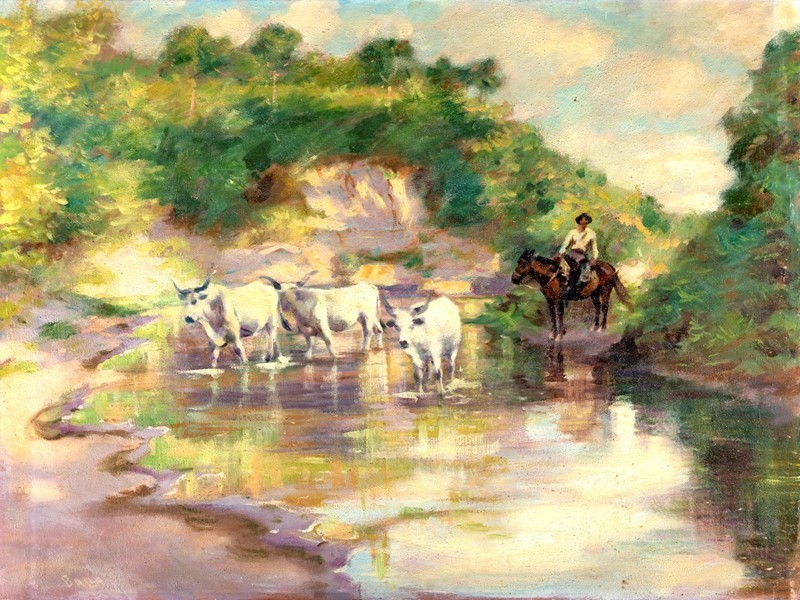
We are interested in the works of Giacomo Balla.
If you would like to receive an appraisal of a Balla work or an entire collection, or to find out how we sell them, please do not hesitate to contact our department managers at the contact details you will find in the contact section, or click here
If you want to know the quotations of Giacomo Balla's works, here is a simple and intuitive guide
PRICE GUIDE TO THE WORKS OF GIACOMO BALLA
First of all, in order to have a complete overview of the quotations of Giacomo Balla's works, it is right from now on to indicate the type of works he produced and the periods, so that we can precisely distinguish the most valuable works from the less valuable ones.
In terms of the type of works, Giacomo Balla was a multifaceted artist. He created works on canvas and wood, drawings on paper, graphic works, sculptures and even furniture.
As far as periods are concerned, one can easily distinguish two macro-periods in Giacomo Balla's career, one abstract-futurist and the other figurative.
In turn, they can be distinguished into:
- Pre-Futurist figurative period (late 19th century to around 1910)
- Futurist period (circa 1910/11 to 1919)
- Late Futurist Period (1920 onwards)
- Late Figurative Period (1920 onwards)
Prices of works on canvas and wood panel by Giacomo Balla
The pre-Futurist figurative period
In chronological order, we will start by analysing the quotations of works from Giacomo Balla's pre-Futurist figurative period, i.e. from the end of the 19th century to around 1910.
The current record for a canvas/canvas from this period is 4.2 million euros, a price achieved for a 100x100 cm masterpiece from 1908.
Apart from the masterpieces, which as always exceed the averages, it can be said that as a rule a canvas/canvas by Giacomo Balla on the market can have a quotation between EUR 10,000 and EUR 500,000.
The Futurist Period
Giacomo Balla's Futurist Period is undoubtedly the one most sought after by collectors. The record for a canvas/canvas made in this period is in fact, not surprisingly, the highest auction ever recorded for a work by Giacomo Balla. It dates back to 2013, when in the United States a work from 1913, 70x100 cm, was sold for EUR 8.5 million.
As a rule, Balla's paintings from this period can fetch a price ranging from EUR 15,000 up to EUR 1 million.
The Late Figurist and Late Futurist Period
From the 1920s onwards, Balla's paintings begin to have lower quotations. The late Futurist period, from 1925 onwards, records quotations that can range between 8,000 euro and 250,000 euro. The current record for a late Futurist work by Giacomo Balla is around 400,000 euro for a work from 1926 measuring 150x200 cm.
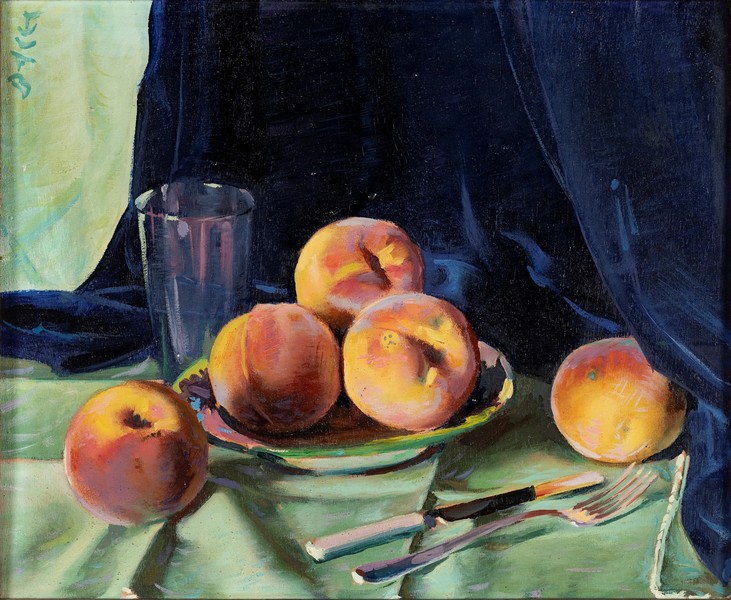
A work from Giacomo Balla's late figurative period, from the 1920s onwards, can be worth on average between EUR 5,000 and EUR 60,000. Currently, the record for a painting from the late figurative period is around EUR 160,000 for a 140x100 cm canvas from 1926.
Quotations for works on paper by Giacomo Balla
The Pre-Futurist Figurative Period
The sales record for a work on paper by Giacomo Balla from this period is 400,000 euros, a figure spent in 1990 for a pastel on paper measuring 130x61 cm, made in 1908. Unfortunately, over the years collectors have increasingly lost interest in the figurative style, preferring instead the abstract, and today on average it is more common to find works by Giacomo Balla from this period between 4,000 euro and 100,000 euro
The Futurist Period
The sales record for a work on paper by Giacomo Balla created at the height of the Futurist period, i.e. between 1911 and 1920, is 1.5 million, a figure spent in 2015 for a watercolour on paper measuring 81x61 cm created in 1914. In this regard, it is interesting to point out that the same work was offered and sold in 1999 at just over €700,000 on that occasion, registering a 100% increase in quotation in 15 years...not bad. On average, the quotations of Balla's works created in this period fluctuate between 6,000 euro and 200,000 euro.
The Late Figurative Period
Later, as early as the 1920s, Balla gradually began to paint works in the figurative style again. Works from this period have lower quotations than those from the pre-Futurist period. As evidence of this, the sales record for a work on paper from this period is 50,000 euros for a mixed media on cardboard created in 1934 measuring 67x118 cm. On average, works on paper from this period can be found on the market with valuations ranging from EUR 1,000 to EUR 25,000.
The Late Futurist Period
As far as quotations for drawings made by Balla in the late Futurist period are concerned, these can range between 4,000 euros and 100,000 euros. The current record for a work on paper from this period is 130,000 euros, a figure spent on a 65x155 cm paper from 1924.
Quotations for sculptures and furniture made by Giacomo Balla
Like so many other Futurist artists, Giacomo Balla was very multifaceted and often also dealt with sculpture and even design, creating beautiful furniture. The current sales record for a sculpture by Giacomo Balla is around EUR 2 million, a figure spent on a 1915 sculpture measuring 82 cm in height. On average, a sculpture or piece of furniture by Giacomo Balla can fetch between EUR 1,000 and EUR 30,000.
Quotation of Giacomo Balla's graphics
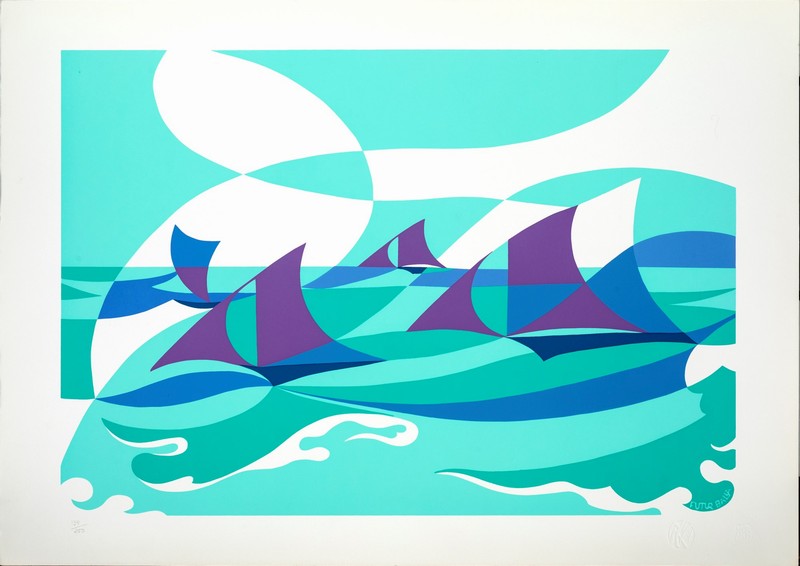
Giacomo Balla produced some splendid graphics. The current record for a graphic work by Giacomo Balla is EUR 4,600 for a 54x100 cm silkscreen print. On average, a graphic by Giacomo Balla can be worth between EUR 100 and EUR 500.
BIOGRAPHY
He was born in Turin on 18 July 1871. His training took place at the Accademia Albertina di Belle Arti and the Liceo Artistico in Turin. In 1895 he moved to Rome where he worked for several years as an illustrator, caricaturist and portraitist. In 1899, his works were presented at the Venice Biennale and the International Exhibition of Fine Arts in Rome. In 1900 he moved to Paris for 7 months. In 1903 and 1904, he taught Severini and Boccioni the painting technique of Divisionism. In 1904 he exhibited at the Glaspalast in Munich and at the Internationale Kunstausstellung in Dusseldorf. In 1909 he exhibited at the Salon d'Automne in Paris. In 1910 he signed the Futurist manifesto with Boccioni, Severini, Carra and Russolo, but only exhibited with the Futurists from 1913 onwards. He painted his first abstract paintings on light during his stays in London and Dusseldorf in 1912. He exhibited in Berlin and Rotterdam in 1913. It was not until 1914 that he took part in the First Futurist Free Exhibition at the Sprovieri Gallery in Rome. He began to make sculptures and furniture. With Fortunato Depero, in 1915, he drafted the manifesto Ricostruzione Futurista dell'Universo (Futurist Reconstruction of the Universe). He subsequently exhibited in major museums and galleries in Europe and the United States. He died in Rome in 1958