
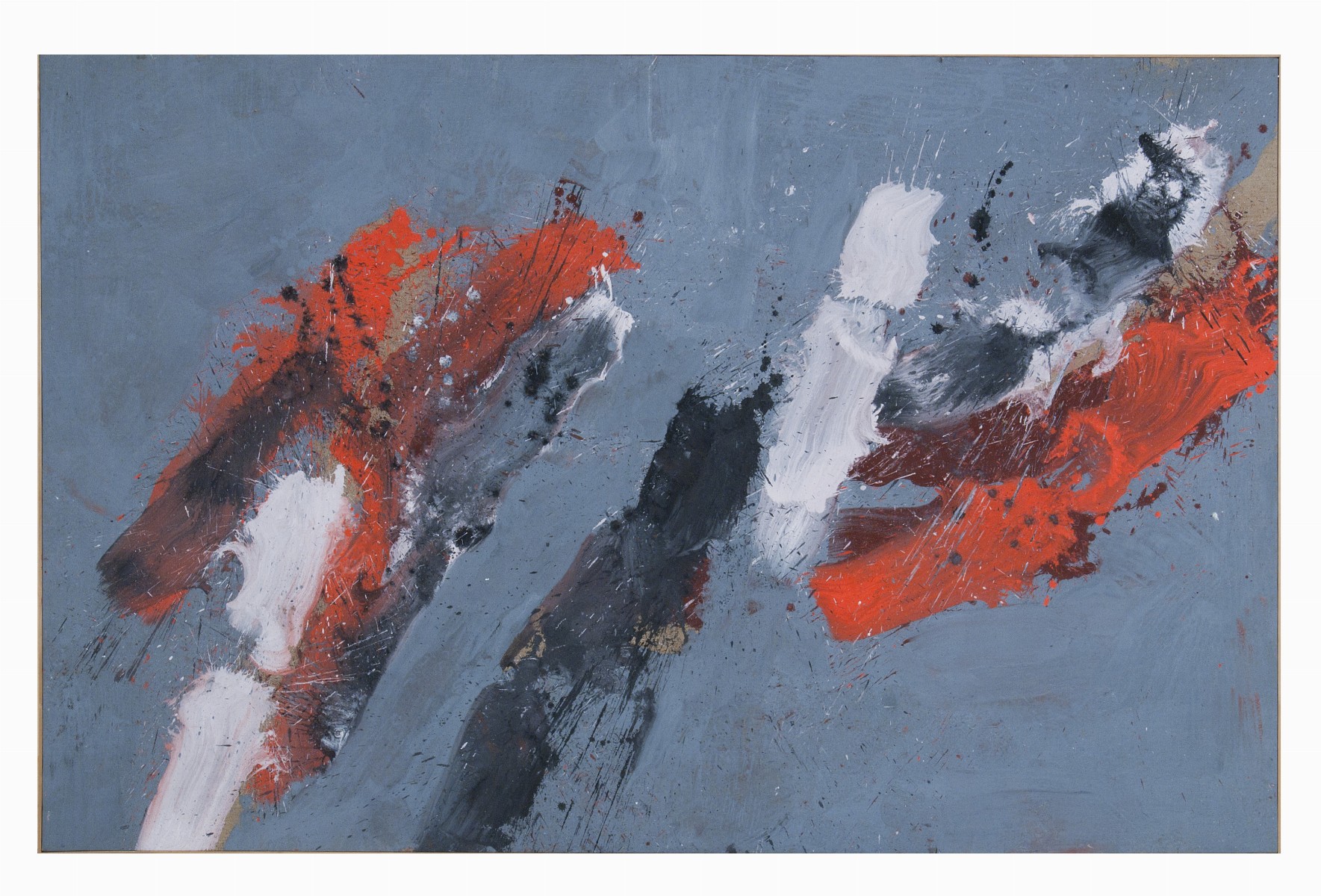
THE SIGN OF SCIALOJA
Return to the human - the understanding between the living and the living
INAUGURATION
20 February at 18:00
The exhibition will be open until 23 February
Curated by the Toti Scialoja Foundation
Casa d'Aste Arcadia is pleased to invite you to the exhibition Il Segno di Scialoja (The Sign of Scialoja), curated by the Fondazione Toti Scialoja, which will be inaugurated on Tuesday 20 February at its premises in Corso Vittorio Emanuele II 18, Rome.
The selection of works, followed by a critical intervention by Arnaldo Colasanti, President of the Toti Scialoja Foundation, will allow the visitor to retrace and understand the importance of the Maestro's last artistic production.
"Painting is simply shroud, an impression of the uncovered inner man, oozing, laden with that liquid which is his living, his passing, his memory of everything in the universe." With these words Toti Scialoja described the sense of his painting. A sense that can all be found in the exhibition held at Arcadia Casa d'Aste in collaboration with the Fondazione Toti Scialoja. "The sense of the exhibition," says the President of the Fondazione Toti Scialoja Arnaldo Colasanti, "is to bring the public's attention back to the last period of Scialoja's artistic production, an intense, happy, absolutely contemporary period, in which all the strength, the corporeity, of the material abstractionism that characterised his art can be found. This is why the exhibition is entitled The Sign of Scialoja. In the twenty-one works on display, one can find the deepest sense of his painting, in which, as the Maestro said: 'Each brushstroke possesses within itself the strength of the germ and the strength of closure, the strength of dawn and night, the strength of the soul, of the eternal return to oneself.'" Fabrizio d'Amico, one of the most important figures in Art criticism between the 1960s and 1980s, had this to say: "Above all in the works created after the 'inspiration' he received while looking at Goya's paintings at the Prado in the 1980s, there is in Scialoja a true 'hand-to-hand' with the canvas, which is assailed by painting on the ground, with blows of the shoulder, elbow, wrist, creating one of the most dynamic and energetic paintings of the Italian twentieth century."