Evaluation Filippo Tagliolini
Filippo Tagliolini Valuations - Want to sell a Filippo Tagliolini piece? Request a complimentary and confidential valuation!Casa d'Aste Arcadia will review your submission and offer a free-of-charge estimate, if your item is suitable for our auctions.Filippo Tagliolini
Filippo Tagliolini (Fogliano di Cascia, 1745 – Naples, 1809) was one of the leading interpreters of Neoclassical sculpture applied to porcelain in Italy. Trained in Rome within the late Baroque milieu, he soon developed a language aligned with archaeological models and the emerging classical sensibility that, in the second half of the eighteenth century, found two major centers of cultural production in Rome and Naples.
A decisive moment in his career came with his move to Naples, where in 1780 he was appointed modeller at the Real Fabbrica Ferdinandea. There he became the foremost specialist of biscuit porcelain—unglazed porcelain whose matte, marble-like surface proved particularly suited to the execution of reliefs and scenes inspired by antiquity.
Tagliolini translated the Neoclassical aesthetic—shaped in part by the excavations of Herculaneum and Pompeii—into porcelain, producing plaques, cameos, medallions, and refined bas-reliefs with mythological and allegorical subjects, often derived from ancient glyptic sources. His compositions are distinguished by formal balance, linear elegance, and crisp plastic clarity, frequently characterized by light, harmonious figures modeled after classical prototypes yet reinterpreted with modern sensitivity.
His production achieved wide circulation among European courts and played a crucial role in establishing the international prestige of the Neapolitan manufactory. Tagliolini succeeded in transforming porcelain into an autonomous sculptural medium, elevating it from decorative art to an expression fully consistent with the principles of the classical ideal.
Today, his work stands as one of the most significant expressions of Italian Neoclassicism within the field of the decorative arts.
Filippo Tagliolini
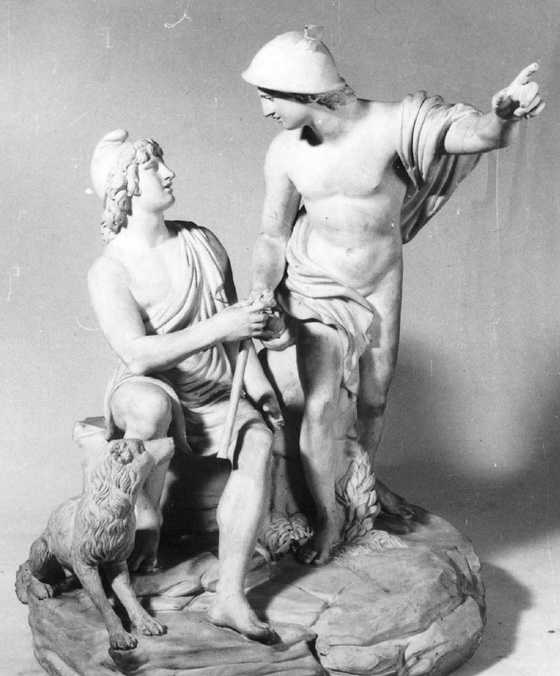
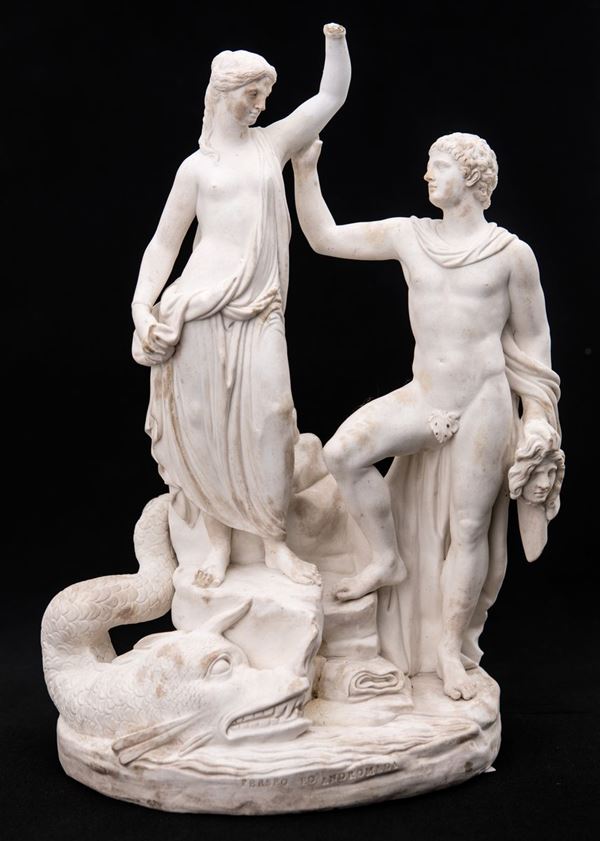
Biscuit group, Naples, Real Fabbrica Ferdinandea, early 19th century
Filippo Tagliolini
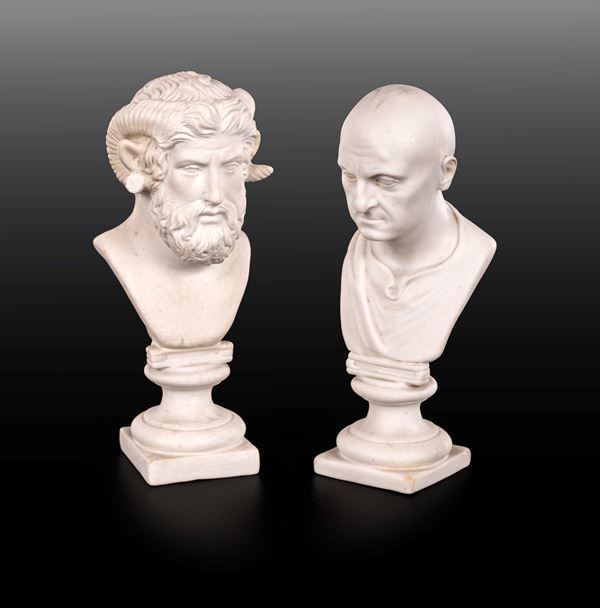
Due bustini in biscuit, Real Fabbrica Ferdinandea, Napoli, fine del XVIII/inizi del XIX secolo
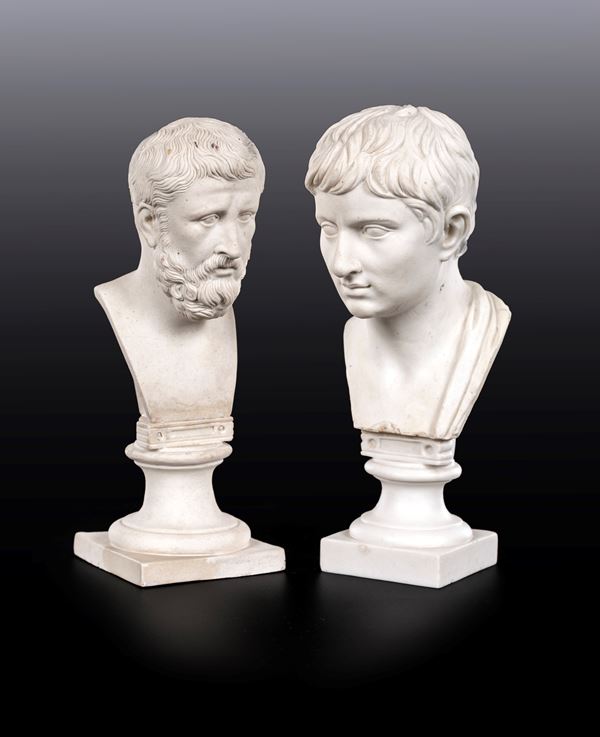
Filippo Tagliolini
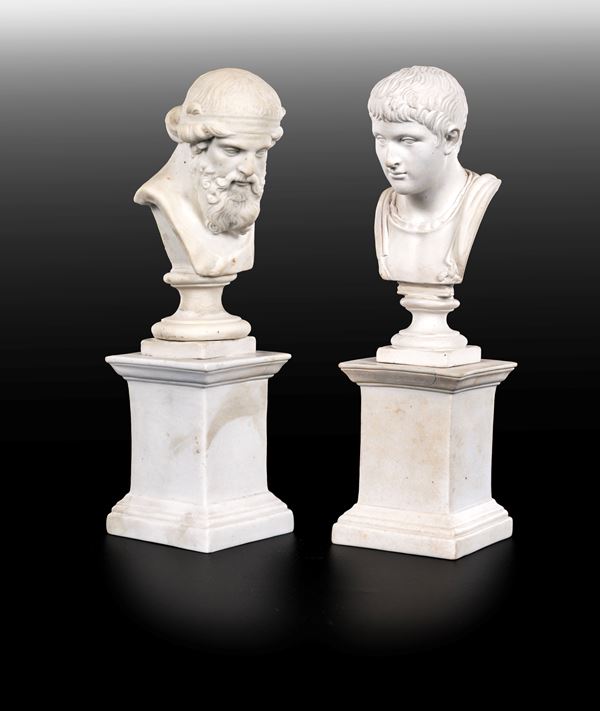
Due bustini in biscuit, Real Fabbrica Ferdinandea, Napoli, fine del XVIII/inizi del XIX secolo
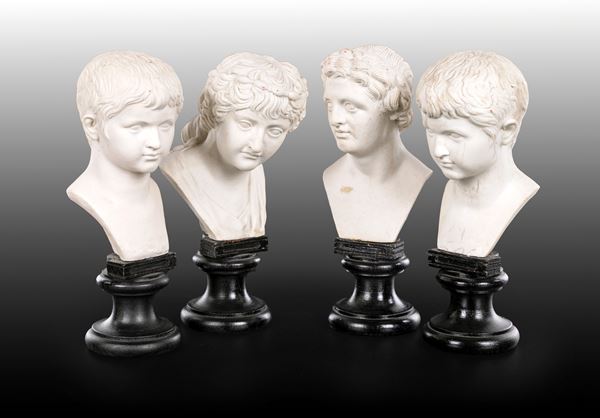
Filippo Tagliolini
Quattro bustini in biscuit, Real Fabbrica Ferdinandea, Napoli, fine del XVIII/inizio del XIX secolo