A passion for the Neapolitan crib
The warning from Gherardo Noce Benigni Olivieri, who is responsible for the wooden and terracotta shepherds that will be auctioned at the Arcadia auction house in RomeThe passion for the Neapolitan nativity scene: woe betide you if you call them puppets!
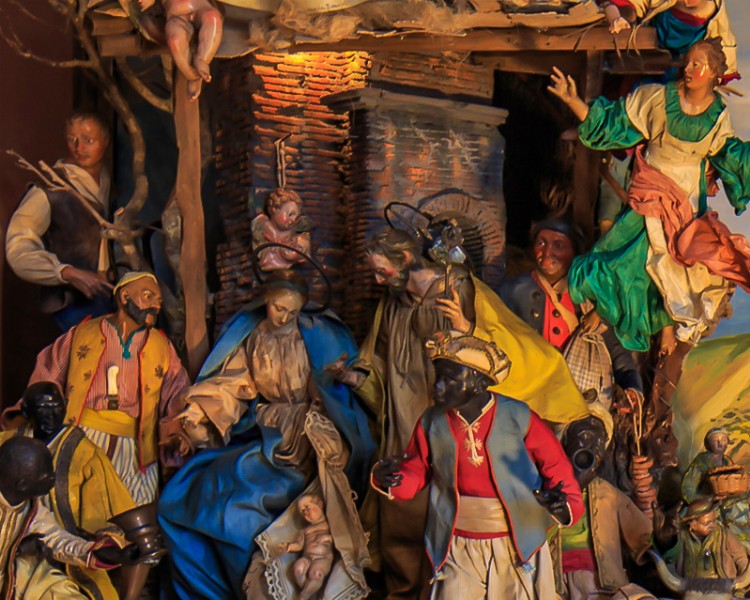
"In Naples, little Bethlehem is transformed into the meeting point of all human knowledge, expressed not only through shepherds, but also through the introduction of various accessories and exotic animals" "Woe betide you if you call them puppets!"This is the warning of Gherardo Noce Benigni Olivieri, an enthusiast of the Neapolitan nativity scene and the person responsible for the wooden and terracotta shepherds that will be auctioned at the Arcadia auction house in Rome on 5 and 6 December. An event more unique than rare, at least within the Capitoline borders. "A child of the Enlightenment and eighteenth-century verism," explained Olivieri, "the Neapolitan nativity scene grew up influenced by the theme of the sacred and, at the same time, the profane. Like a prodigal son who leaves his liturgical roots, attracted by the lure of hedonism, only to return to the thatched roof of his nativities.
This is why it is still extremely difficult today to come across Neapolitan nativity scenes within the walls of the most traditionalist churches: much easier to admire nativities faithful to the nativity model first presented by St Francis in Greccio, in 1223, composed of the classic mother, father, baby, ox and donkey scheme.
The panorama within which the Neapolitan nativity scene, on the contrary, is much broader. In Naples, little Bethlehem becomes the meeting point of all human knowledge, expressed not only through shepherds, but also through the introduction of various accessories and exotic animals. The Neapolitan shepherds tell us a lot about how the clothing of the inhabitants of the two Sicilies differed according to class and wealth. And not only that. With the figures of the trigozzuta old woman and the scartellato, hunchbacked and slouching, the Campanian artists attempted to show off their knowledge of human handicaps and physical deficiencies. The Neapolitan nativity scene is the most universally accessible key to the Encyclopaedias of the contemporaries Diderot and D'Alembert.
It is no coincidence that eighteenth-century Naples used to host ambassadors from all corners of the earth, ready to pay homage to the Bourbons with exotic and colourful gifts, which were punctually passed on to the nativity culture. The scenographic aspect is another element by which the Neapolitan nativities and shepherds in Arcadia differ from any more traditional nativity scene.
The gentlemen of Campania at the time, in fact, enjoyed exhibiting their nativity scenes and even competed for the spectacularity of their masterpieces, as a form of pure Pascalian divertissement. To conclude, I refer to the words of the aforementioned Gherardo Noce: 'Observing an 18th-century Neapolitan nativity scene always means immersing oneself in an intricate composite of scenes and figures that follow one another as if by magic, the shepherds show themselves one by one, and the moment we think we have noticed even the smallest detail or the most hidden shepherd, suddenly others appear, and others still'".
THE VESUVIAN GAZETTE