A DEBUT IN STYLE FOR ARCADIA
with antiques, old and 19th century paintingsThe Spring Auction is held on 18 April in Rome.
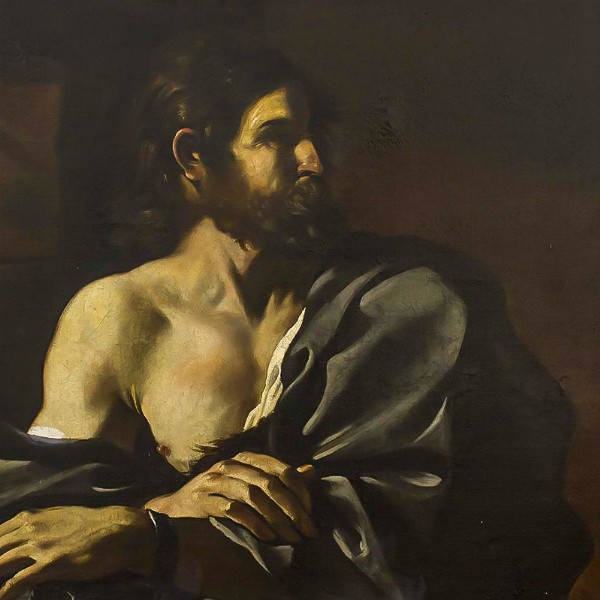
The protagonist is Guercino, with St. John the Baptist visited in prison by Salome. The beginning of spring is lively for Italian collecting, thanks to some important exhibitions inaugurated in recent days, such as 'Lot, Artemisia and Guercino: The Secret Rooms of Vittorio Sgarbi' and the one that, in the Umbrian capital, presents the works collected by the Fondazione Cassa di Risparmio di Perugia.
Against this backdrop of renewed interest in the Italian masters of the Renaissance and Caravaggism, Casa d'Aste Arcadia debuts in April and presents its 19th-century antique paintings, objets d'art, furniture and other paintings, all from private Roman collections. Auction Number 1 will be held in Rome on Monday, 18 April in a single round starting at 4 p.m., at the Palazzo Celsi Viscardi in Corso Vittorio Emanuele II, no. 18.
There are 270 lots for sale, with a wide range of starting prices, even for novice collectors: objects for those who want to enjoy beauty without over-investing, moving on to paintings, sculptures and furniture of great historical value, and finally to an absolute masterpiece: a work by Giovanni Francesco Barbieri known as Guercino, one of the great masters of 17th century Italian painting. The painting (oil on canvas 75×100 cm) depicts the saint imprisoned within a gloomy environment, barely brightened by the light filtering through the bars of a grille from which Salome appears.
As we know from the biblical account, the Baptist's head would have been requested at a banquet as a prize for the princess's dance, who goes to the prison to confer with John and look at his face one last time. The dramatic impact stems from a series of contrasts: the anatomical beauty of the Baptist is hardened by the disdain that renders him immobile; his gaze is black, inscrutable, as if to prevent the observer, as well as Salome, from reading his thoughts; the beautiful male hands, however, are resting languidly as if to form a whole with the drapery of the robe.
The drama of the contrast reaches its peak when one dwells on the girl's wrist, tense and swollen, and on her fingers, much less tapered than those of the saint and rendered cyanotic by the pressure. The work was examined in 1960 by Roberto Longhi who, eight years later, completed his study with a letter to the owner, in which he declared its undisputed qualitative superiority to another famous version owned by one of the greatest collectors and historians of the last century, Sir Denis Mahon.
A preview of the auction will take place in Rome on 12 April, in the presence of experts and industry insiders. The lots will then be exhibited to the public, from Wednesday 13 to Sunday 17 April, from 10 am to 8 pm. Among the most interesting works are the splendid collection of old paintings and authors that make up the catalogue such as: The Triumph of Galatea by Corrado Giaquinto (oil on canvas - 108×124 cm) [[[]]20.000-25.000 €[]], exhibited at the Swabian Castle in 1993, for the exhibition 'Masterpieces of the Courts of Europe'; Melanconie Autunnali di Antonio Fontanesi (oil on canvas – cm 86×107) [[[]]80.000 -120.000 €[]], presented in Paris for the 1876 Salon; Lo Spazzacamino di Donato Barcaglia (marble sculpture – cm 110) [[[]]10.000 – 15.000 €[]],one of the greatest exponents of late 19th century Italian sculpture, and head of one of the most prolific and successful sculpture studios in Italy.
A version with minor differences entitled Street Orderly Boy can be found in London's Paddington Street Gardens; La Natura Morta di Giovanni Battista Ruoppolo (olio su tela – cm 67×84) [[[]]40.000 -50.000 €[]], painting that perfectly fulfils the saying that 'nothing is truer than the true and it is true'. The greatest artists, and especially those working in Naples at the turn of the 17th century competed on this theme, and this work masterfully succeeds.
The artistic tension in fact exploded in Naples more than anywhere else, creating refined painters who devoted themselves to a predilection for the real and the everyday: fish, birds, vegetables of all species became the protagonists of this new world. Indeed, it should not be forgotten that a never-quenched echo of Caravaggio's albeit brief stay in the city guided minds to a very high argumentation towards the real. Then there is Il banchetto di Baldassarre by Ambrosius Francken I il Vecchio (olio su rame – cm 53×70). And finally the enigmatic Ritratto di Gentildonna of the Triestine and naturalised Roman Bruno Croatto (olio su tela cm 110×90) [[[]]4.000 -6.000 €[]], refined subject and likely to meet the interest of numerous collectors. Last but not least, an assortment of rare furniture, including, for example, the splendid gilded and lacquered wooden centre table with a shell-shaped top supported by dolphins, estimated at € 4000-6000, or the important pair of consoles with carved and gilded wooden mirrors, attributable to the mid-18th century (330 x 94 x 27 cm) [[[]]€ 40,000-60,000 []].
Arcadia's aim is to revive the atmosphere of traditional English auctions, with a focus on the antique furniture sector and a constant penchant for decorative art. Beauty our goal, transparency our tool.