
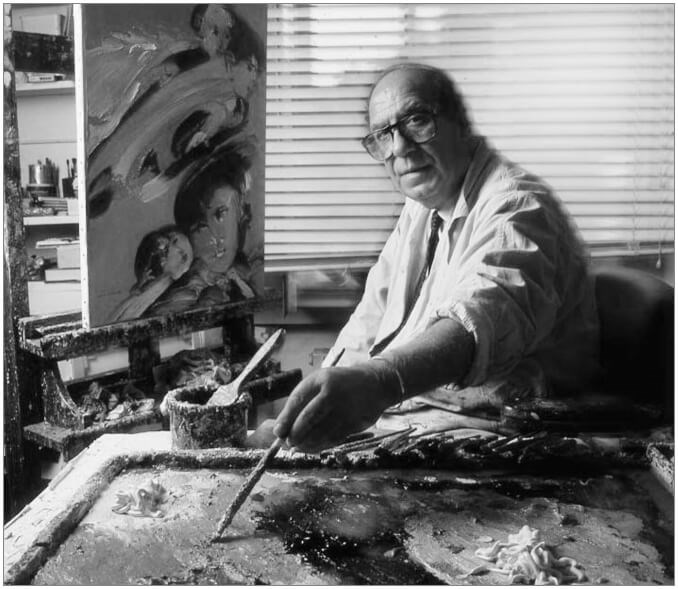
Evaluation Remo Brindisi
Remo Brindisi Valuations - Want to sell a Remo Brindisi piece? Request a complimentary and confidential valuation!Casa d'Aste Arcadia will review your submission and offer a free-of-charge estimate, if your item is suitable for our auctions.
biography
Remo Brindisi (Rome, April 25, 1918 – Lido di Spina, July 25, 1996) was one of the masters of Italian painting in the second half of the 20th century. Born into an Abruzzo family, he attended the Mario dei Fiori Art School in Penne, the Academy of Fine Arts in Rome, and the Higher Institute of Art for Book Illustration in Urbino. His artistic training was enriched by study trips to Florence, Paris, and Venice, cities that deeply influenced his style. After his first solo exhibition in Florence in 1940, presented by Eugenio Montale, Brindisi exhibited in major Italian and international galleries, including Milan, Venice, Rome, Paris, Nice, Cairo, and São Paulo, Brazil.
Remo Brindisi’s painting is characterized by a strong expressionist imprint and his association with the international New Figuration movement. His recurring themes include figures, faces, landscapes, the "Venices", the "Opponents", the "Shepherds", and the "Maternities", with a particular focus on social and political subjects. Among his most famous works are the cycle "History of Fascism" (1957–1962) and the fourteen canvases of the "Via Crucis" (1956–1957), which testify to his sensitivity towards collective suffering and the epic dimension of history. Brindisi also created religious symbols carried in procession on Good Friday in L’Aquila.
Throughout his career, Remo Brindisi gained international recognition and today schools and streets in various Italian cities are dedicated to him. His artistic activity was mainly centered between Milan and Lido di Spina, where he passed away in 1996. His work continues to be studied and appreciated by critics and collectors, confirming him as one of the most significant painters in the Italian art scene of the 20th century.
Remo Brindisi’s painting is characterized by a strong expressionist imprint and his association with the international New Figuration movement. His recurring themes include figures, faces, landscapes, the "Venices", the "Opponents", the "Shepherds", and the "Maternities", with a particular focus on social and political subjects. Among his most famous works are the cycle "History of Fascism" (1957–1962) and the fourteen canvases of the "Via Crucis" (1956–1957), which testify to his sensitivity towards collective suffering and the epic dimension of history. Brindisi also created religious symbols carried in procession on Good Friday in L’Aquila.
Throughout his career, Remo Brindisi gained international recognition and today schools and streets in various Italian cities are dedicated to him. His artistic activity was mainly centered between Milan and Lido di Spina, where he passed away in 1996. His work continues to be studied and appreciated by critics and collectors, confirming him as one of the most significant painters in the Italian art scene of the 20th century.
Past lots of Remo Brindisi

Remo Brindisi©
(Roma, 1918 - Lido Di Spina, 1996)
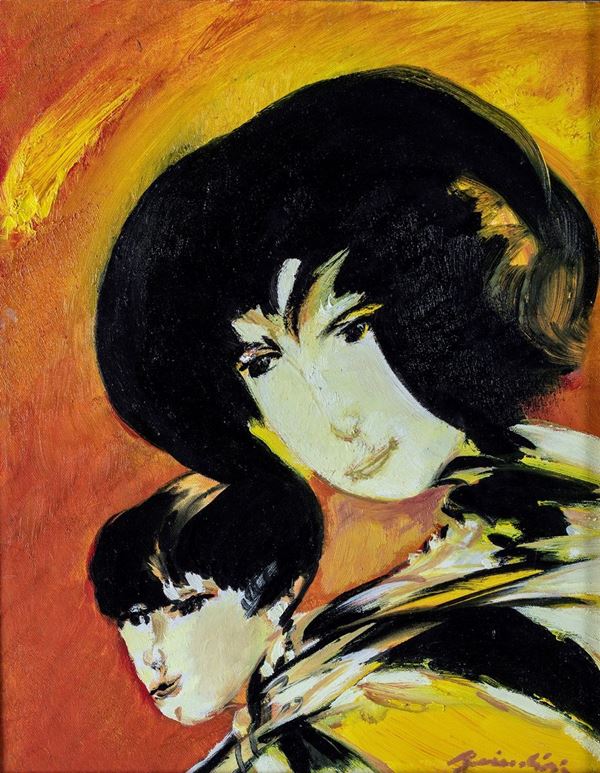
Maternità
Firma in basso a sinistra "Brindisi". Al verso autentica firmata Brindisi. Olio su tela cm 70x50 - in cornice cm 90 [..]
Sold
Remo Brindisi©
(Roma, 1918 - Lido Di Spina, 1996)
Venezia
Firma in basso a destra "Brindisi". Al verso reca "Olio Autentico Brindisi". Olio su tela cm 40x30 - in cornice cm 58x48
Sold
Remo Brindisi©
(Roma, 1918 - Lido Di Spina, 1996)
Opposizione in azione
Firma in basso a destra "Brindisi". Al vero reca "Olio autentico Brindisi" e titolo Olio su tela cm 40x30
Sold
Remo Brindisi©
(Roma, 1918 - Lido Di Spina, 1996)
I sette vizi capitali
Cartella completa delle 7 xilografie eseguite nel 1981 da Remo Brindisi e realizzate dalla Maxart Serigrafica Editore Milano, [..]
Sold
Remo Brindisi©
(Roma, 1918 - Lido Di Spina, 1996)
Venezia
Firma e numerazione "Brindisi p.a." Serigrafia cm 70x50
Sold
Remo Brindisi©
(Roma, 1918 - Lido Di Spina, 1996)
Senza titolo
Firma in basso a destra. Al verso reca numerazione "P.d.a".
Sold
Remo Brindisi©
(Roma, 1918 - Lido Di Spina, 1996)
Venezia
Firma e numerazione "Brindisi p.a." Serigrafia cm 50x70
Sold
Remo Brindisi©
(Roma, 1918 - Lido Di Spina, 1996)
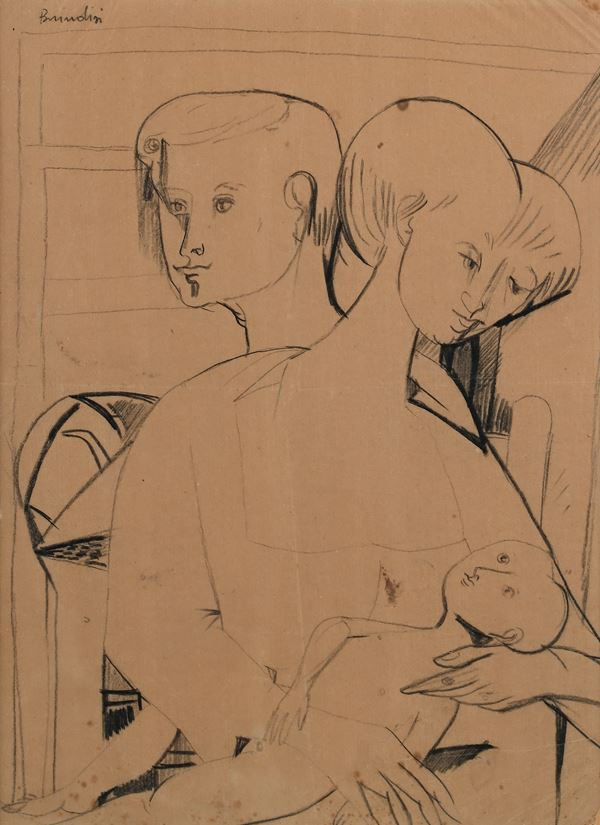
Famiglia
Firma Brindisi in alto a sinistra Matita su carta cm 41,5x30,5 - in cornice cm 63x51
Remo Brindisi©
(Roma, 1918 - Lido Di Spina, 1996)
Figure con capra
Firma in basso a sinistra "Brindisi". Al verso reca autentica a firma Brindisi Olio su tela cm 40x30 - in cornice cm 58x4 [..]
Remo Brindisi©
(Roma, 1918 - Lido Di Spina, 1996)
Figure
Firma in basso a sinistra "Brindisi". Al verso reca autentica "Olio autentico Brindisi". Olio su tela cm 40x30 - in cornice [..]
Remo Brindisi©
(Roma, 1918 - Lido Di Spina, 1996)
Uomo e cucitrice elettrica
Tempera su cartone pressato cm 49,5x70
Remo Brindisi©
(Roma, 1918 - Lido Di Spina, 1996)
Isola di San Giorgio
Firmato in basso al centro. Al verso reca autentica con firma di pugno dell'artista e timbro "casa di vendite palazzo bernini". [..]
Remo Brindisi
(Roma, 1918 - Lido Di Spina, 1996)
No title
Sign "Brindisi" on the lower right. On the reverse it bears authentic handwritten signed by the author, Galleria d'Arte [..]
Remo Brindisi©
(Roma, 1918 - Lido Di Spina, 1996)
Venezia
Firma sul fronte "Brindisi".
Remo Brindisi©
(Roma, 1918 - Lido Di Spina, 1996)
Senza titolo
Firma in basso a destra. Numerata 74/100.
Remo Brindisi©
(Roma, 1918 - Lido Di Spina, 1996)
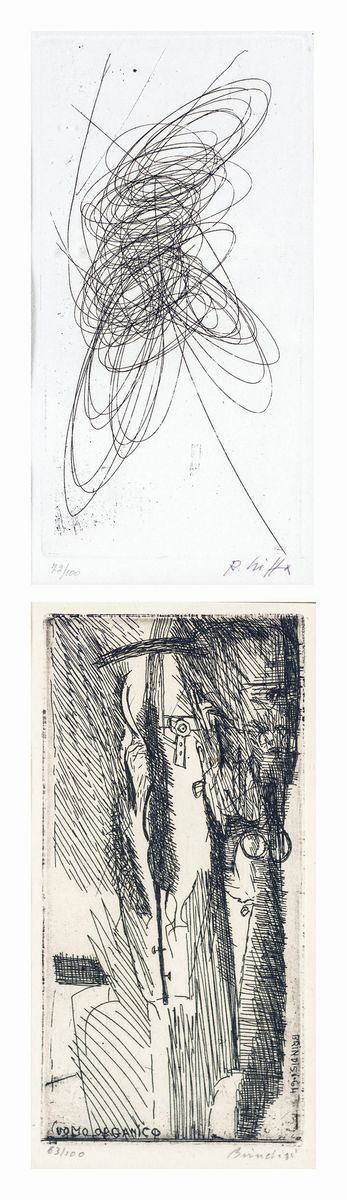
Roberto Crippa©
(Monza, 1921 - Besso, 1972)
Lotto di due acquaforti
Entro stessa cornice (62x24,5). Le acquaforti misurano 21x11 cm l'una. A) Spirale, firma e numerazione sul fronte [..]
Remo Brindisi©
(Roma, 1918 - Lido Di Spina, 1996)
Figure
Firma sul fronte "Brindisi". Al verso reca timbro della Galleria d'Arte Parametro (Roma).
Remo Brindisi©
(Roma, 1918 - Lido Di Spina, 1996)
L'ABBRACCIO
Firma in basso a destra "Brindisi".
Remo Brindisi©
(Roma, 1918 - Lido Di Spina, 1996)
Venezia
Venezia
Olio su tavola, cm 14,5x31
Firmato in basso a destra "Brindisi"
Remo Brindisi©
(Roma, 1918 - Lido Di Spina, 1996)
Venezia
Venezia
Olio su tela, cm 40x30
Firma in basso a destra "Brindisi"
Al retro timbro della Galleria d'Arte [..]