
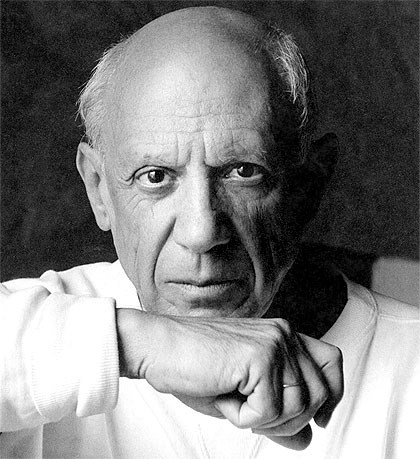
Evaluation Pablo Picasso
Pablo Picasso Valuations - Want to sell a Pablo Picasso piece? Request a complimentary and confidential valuation!Casa d'Aste Arcadia will review your submission and offer a free-of-charge estimate, if your item is suitable for our auctions.
biography
Pablo Picasso, born in Malaga on October 25, 1881, and died in Mougins on April 8, 1973, is one of the most influential artists of the 20th century, a Spanish painter, sculptor, and lithographer who revolutionized modern art. Son of painter and professor Jose Ruiz Blasco and Maria Picasso y Lopez, Pablo showed exceptional talent from childhood: his father introduced him early to drawing and painting, so that by age eight he was already painting masterfully. The family moved first to La Coruna in 1891, where Pablo attended the School of Fine Arts, and then to Barcelona in 1895, at the La Llotja Academy, where he entered at age 13 after an extraordinary exam. These formative years in Spain laid the foundations for his extraordinary career, marked by innovative and versatile genius.
In 1900 Picasso moved to Paris, the epicenter of bohemian art, where he developed his first artistic periods: the Blue Period (1901-1904), characterized by melancholic tones and themes of poverty and suffering, and the Rose Period (1904-1906), warmer and more serene with circus figures. His revolutionary turning point came with Cubism, co-invented with Georges Braque around 1907, which shattered traditional forms to represent reality from multiple perspectives, as in the iconic Les Demoiselles d'Avignon. Fleeing Spain during the Civil War in 1936, he created Guernica in 1937 for the Spanish Pavilion at the Paris Universal Exhibition, a work symbolizing war and fascist horror. His works, auctioned by houses like arcadia, reach million-dollar prices.
In 1900 Picasso moved to Paris, the epicenter of bohemian art, where he developed his first artistic periods: the Blue Period (1901-1904), characterized by melancholic tones and themes of poverty and suffering, and the Rose Period (1904-1906), warmer and more serene with circus figures. His revolutionary turning point came with Cubism, co-invented with Georges Braque around 1907, which shattered traditional forms to represent reality from multiple perspectives, as in the iconic Les Demoiselles d'Avignon. Fleeing Spain during the Civil War in 1936, he created Guernica in 1937 for the Spanish Pavilion at the Paris Universal Exhibition, a work symbolizing war and fascist horror. His works, auctioned by houses like arcadia, reach million-dollar prices.
Past lots of Pablo Picasso

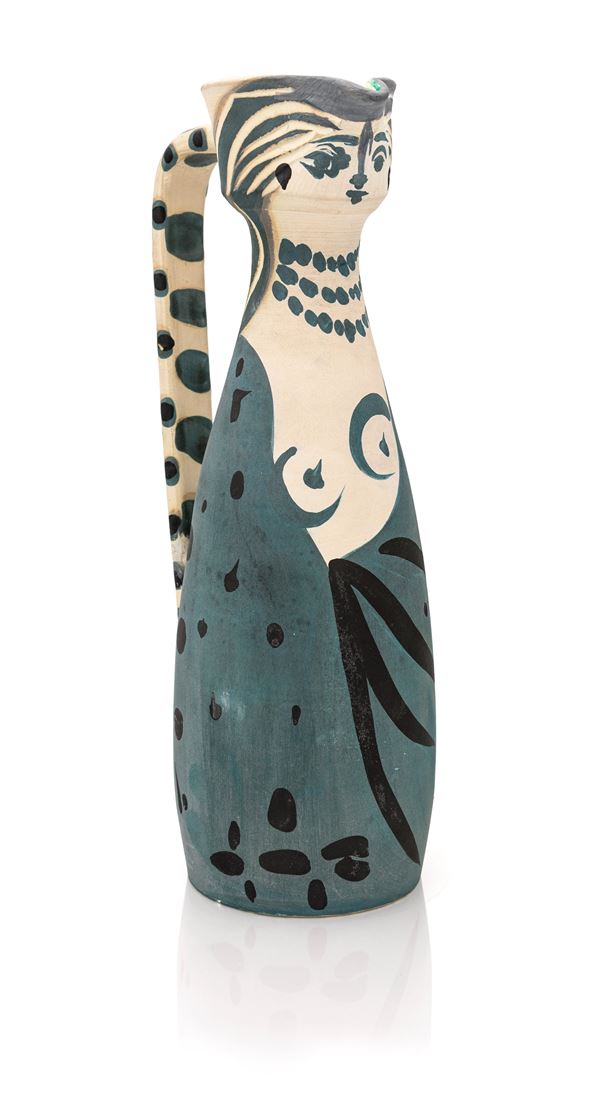
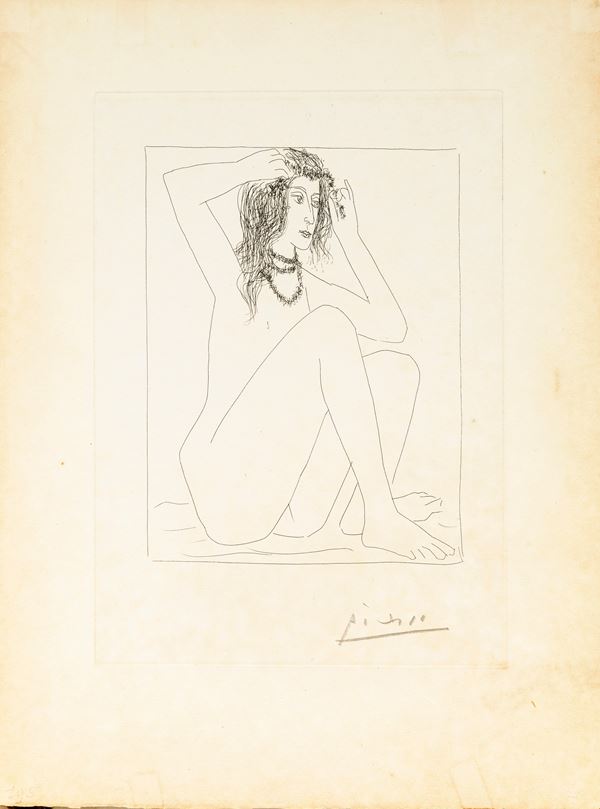
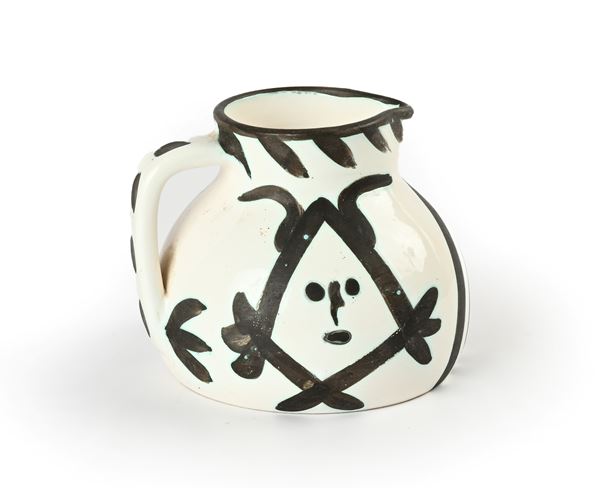
Pablo Picasso©
(Malaga , 1881 - Mougins, 1973)
Portrait d'homme - Carnet Catalan
Trattasi di quattro disegni di Pablo Picasso contenuti all'interno della famosa pubblicazione edita nel 1958 da Berggruen [..]
Sold
Pablo Picasso©
(Malaga , 1881 - Mougins, 1973)
Femme (A.R. 301)
On the base: hand-engraved inscription EDITION / PICASSO with edition number 166 / 200 ; stamp EDITION / PICASSO ; stamp [..]
Sold
Pablo Picasso
(Malaga , 1881 - Mougins, 1973)
After
Femme dans l'atelier
Firma e numerazione a matita "Picasso 143/350". Al verso reca filigrana "Arches" e timbro a inchiostro dell'editore "Guy [..]
Sold
Pablo Picasso
(Malaga , 1881 - Mougins, 1973)
Ceramic plate
On the reverse it bears the stamp "Empreinte Originale de Picasso - Madoura".
Sold
Pablo Picasso©
(Malaga , 1881 - Mougins, 1973)
Femme nue se couronnant de Fleurs (tavola 2 dalla Suite Vollard)
Firma a matita "Picasso". Timbro a secco in basso a destra "Libreria Prandi Reggio Emilia". Filigrana "Vollard" visibile [..]
Sold
Pablo Picasso
(Malaga , 1881 - Mougins, 1973)
Taureau et chevaux in the arène
Signature in pencil on the lower right front "Picasso". Picasso, Catalog of the printed graphic work, Vol. I, edited by [..]
Sold
Pablo Picasso©
(Malaga , 1881 - Mougins, 1973)
Senza titolo
Firma e numerazione a matita "Picasso, 3/50". Filigrana Arches visibile in controluce Incisione all'acquaforte su carta [..]
Sold
Pablo Picasso
(Malaga , 1881 - Mougins, 1973)
No title
Signature and numbering in pencil on the lower front "Picasso, H.C.". On the plate at the top left, date and signature.
Sold
Pablo Picasso©
(Malaga , 1881 - Mougins, 1973)
May 10, 1968
Signature and numbering on the lower front "Picasso, 15/50"
Sold
Pablo Picasso©
(Malaga , 1881 - Mougins, 1973)
Les Ménines et La Vie
Firma e numerazione "Picasso, Epreuve d'artiste" Incisione acquaforte cm 19,5x15 (lastra) - in cornice cm 49x35
Sold
Pablo Picasso©
(Malaga , 1881 - Mougins, 1973)
Danseurs
Al verso reca timbri "Empreinte originale de Picasso" e "Madoura" Terracotta smaltata cm 20 Ø
Sold
Pablo Picasso©
(Malaga , 1881 - Mougins, 1973)
The painter and the model 01/04/71
Signature and numbering on the lower front "Picasso, 20/50".
Sold
Pablo Picasso©
(Malaga , 1881 - Mougins, 1973)
Brocca
Sotto la base "Edition Picasso" e stampi "Edition Picasso" e "Madoura" Ceramica dipinta cm h 12x15 ø
Sold
Pablo Picasso©
(Malaga , 1881 - Mougins, 1973)
Ovale a L'oeil A
Al verso reca "Poiçon original de Picasso". A penna "-15/500, Madoura, j. 164" Terracotta cm 15x15 - in cornice cm 35x35
Sold
Pablo Picasso©
(Malaga , 1881 - Mougins, 1973)
Copertina del quotidiano Le Patriote illustrata da Picasso
Firma e dedica a pennarello "Pour Antonello (Trombadori) mon amis, Picasso, Le 6.3.65"
Sold
Pablo Picasso©
(Malaga , 1881 - Mougins, 1973)
d'apr�s
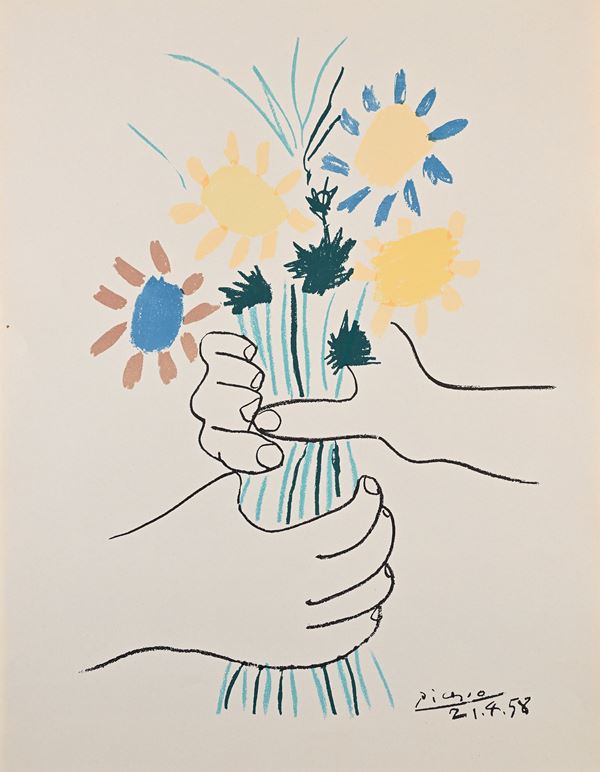
Mazzo di fiori
Riproduzione stampa off-set cm 65x50 circa - in cornice cm 70x55
Sold
Pablo Picasso©
(Malaga , 1881 - Mougins, 1973)
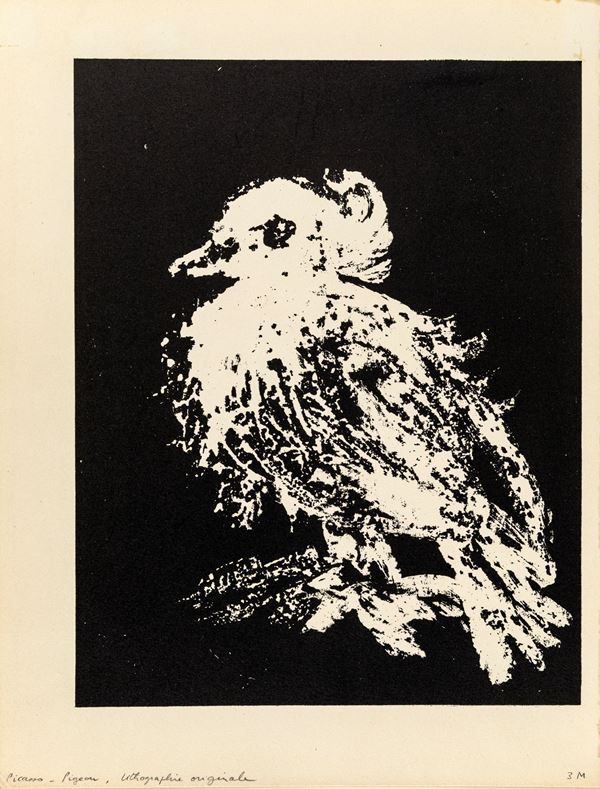
La petite Colombe
Trattasi della litografia realizzata come frontespizio per il Tomo I della pubblicazione Picasso Lithographe. Litografia [..]
Sold
Pablo Picasso©
(Malaga , 1881 - Mougins, 1973)
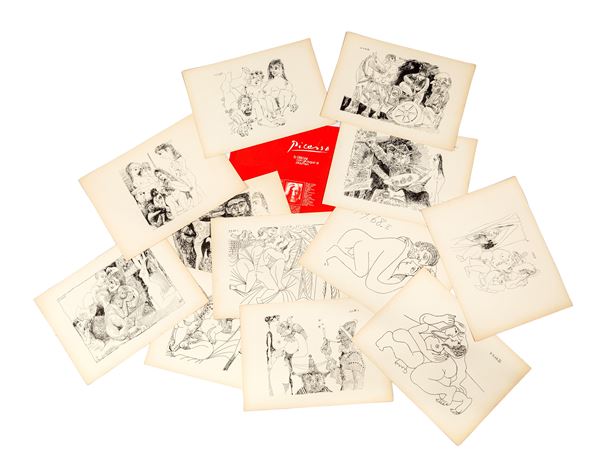
12 disegni con gli auguri di Playman
Trattasi di 12 riproduzioni di disegni di Picasso (Tratti dalle incisioni di Mougins) che Playmen ha donato ai suoi lettori. [..]
Pablo Picasso©
(Malaga , 1881 - Mougins, 1973)
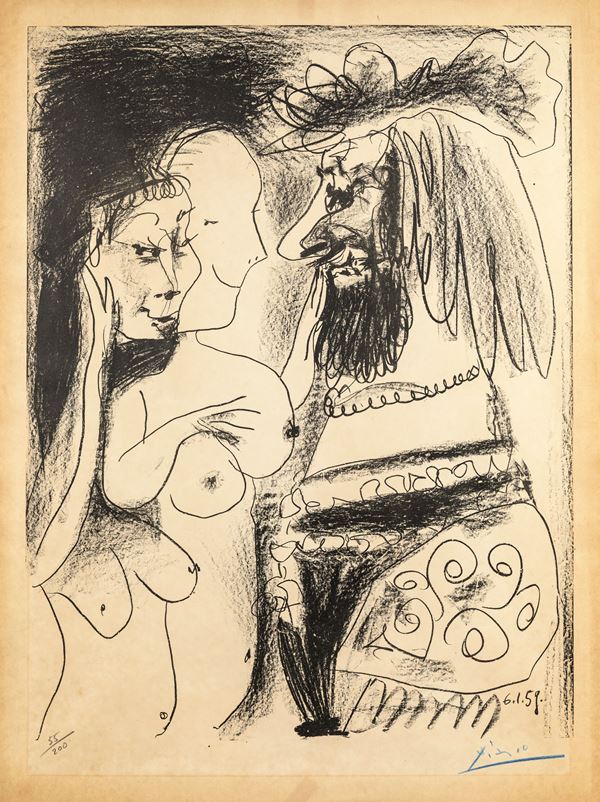
Le Vieux Roi
Firma a pastello blu "Picasso" e numerata a matita "55/200". In controluce è visibile la filigrana della carta Arches. Timbro [..]
Pablo Picasso©
(Malaga , 1881 - Mougins, 1973)
Bouquet a la pomme
Al retro reca marchio "Empreinte originale de Picasso" e "Madoura" Ceramica cm 25 Ø
Pablo Picasso©
(Malaga , 1881 - Mougins, 1973)
Orgy chez les Filles, avec spectateurs tirés de l'enterrement du Comte Orgaz
Signature and numbering "Picasso, 17/50" - Etching Acquaforte cm 55x42,5 (foglio)