
Evaluation Lucio Fontana
Lucio Fontana Valuations - Want to sell a Lucio Fontana piece? Request a complimentary and confidential valuation!Casa d'Aste Arcadia will review your submission and offer a free-of-charge estimate, if your item is suitable for our auctions.
biography
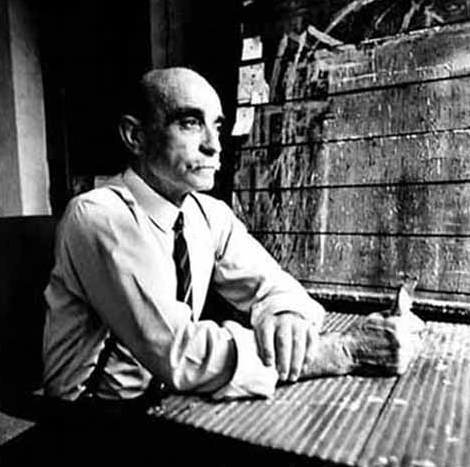
Lucio Fontana (Rosario, Argentina, 1899 - Varese, 1968) was an Argentine-born, Italian-naturalized painter, sculptor, and ceramist, and one of the major figures of 20th-century art. Born into a family of Italian origin, he moved to Milan as a child, where he developed his artistic sensitivity and studied at the Accademia di Brera, graduating in 1930 under Adolfo Wildt. His early work moved between figuration and abstraction, already pointing toward a progressive departure from academic tradition.
After returning to Buenos Aires in the early 1940s, Fontana worked intensively as a sculptor and took part successfully in several competitions. In 1947 he founded the Spatial Movement and, together with other artists and intellectuals, published the First Manifesto of Spatialism, launching one of the most innovative postwar avant-gardes. In the following years he developed the celebrated language of the Concetti Spaziali, transforming painting into an exploration of space, light, and matter.
Between the late 1940s and the 1950s, Lucio Fontana created spatial environments, continued his ceramic practice in Albissola, and collaborated with avant-garde architects. During this period he also began the series of the Buchi, the Pietre, and later the Tagli, works that made his name internationally famous and marked a decisive turning point in the history of contemporary art. His artistic vision deeply influenced painting, sculpture, and installation art, securing his place among the great masters of the 20th century.
Lucio Fontana remains highly sought after on the art market, with works valued by collectors and institutions for their historical and innovative importance. His biography, closely connected to the cultural dialogue between Italy and Argentina, is still essential for understanding Spatialism and the emergence of a new way of conceiving space in art. For Lucio Fontana artworks quotations and valuation, his name remains a key reference in auctions and the international collecting market.
After returning to Buenos Aires in the early 1940s, Fontana worked intensively as a sculptor and took part successfully in several competitions. In 1947 he founded the Spatial Movement and, together with other artists and intellectuals, published the First Manifesto of Spatialism, launching one of the most innovative postwar avant-gardes. In the following years he developed the celebrated language of the Concetti Spaziali, transforming painting into an exploration of space, light, and matter.
Between the late 1940s and the 1950s, Lucio Fontana created spatial environments, continued his ceramic practice in Albissola, and collaborated with avant-garde architects. During this period he also began the series of the Buchi, the Pietre, and later the Tagli, works that made his name internationally famous and marked a decisive turning point in the history of contemporary art. His artistic vision deeply influenced painting, sculpture, and installation art, securing his place among the great masters of the 20th century.
Lucio Fontana remains highly sought after on the art market, with works valued by collectors and institutions for their historical and innovative importance. His biography, closely connected to the cultural dialogue between Italy and Argentina, is still essential for understanding Spatialism and the emergence of a new way of conceiving space in art. For Lucio Fontana artworks quotations and valuation, his name remains a key reference in auctions and the international collecting market.
Lots up for auction of Lucio Fontana
Lucio Fontana©
(Rosario Argentina, 1899 - Varese, 1968)
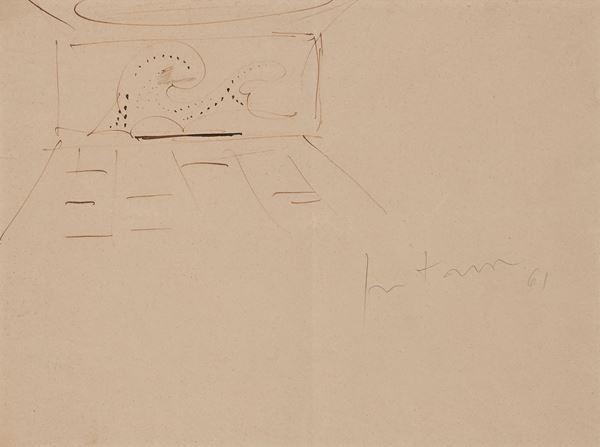
Studi per parete
Firma e data sul fronte "Fontana '61" China su carta cm 21x28 - in cornice cm 41x53
Lucio Fontana©
(Rosario Argentina, 1899 - Varese, 1968)
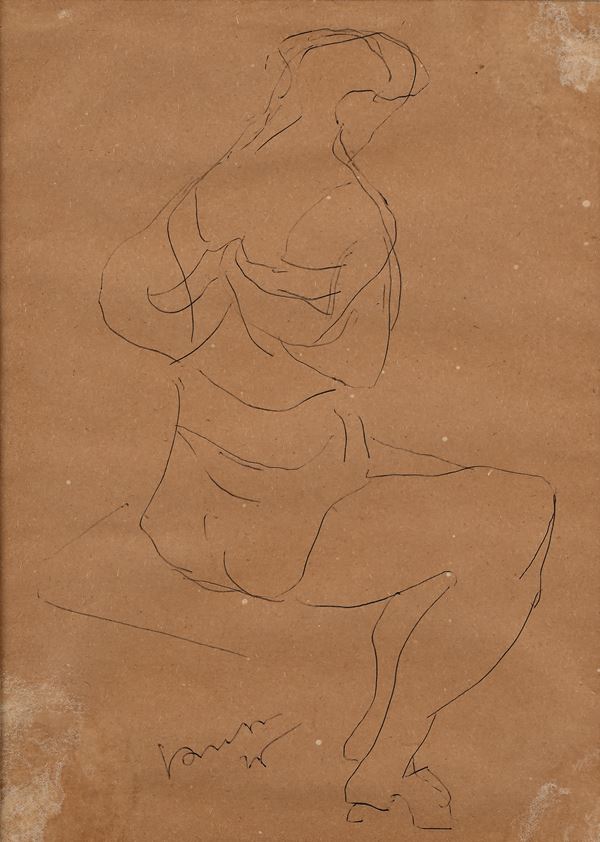
Figura Femminile
Firma in basso a sinistra "Fontana" Inchiostro nero su carta cm 25x19 - in cornice cm 42x35
Past lots of Lucio Fontana

Lucio Fontana
(Rosario Argentina, 1899 - Varese, 1968)
Study for Apparition of the Sacred Heart to Santa Margherita Alacocucque
Signature and date lower right "Fontana '55" - Ink and tempera (blue, yellow, black, gold and red) on paper China e [..]
Sold
Lucio Fontana
(Rosario Argentina, 1899 - Varese, 1968)
Spatial Concept (Lives)
Signature and numbering on the lower front "" L.Fontana 8/99 " - Aquatint engraving with reliefs and holes Incisione [..]
Sold
Lucio Fontana©
(Rosario Argentina, 1899 - Varese, 1968)
Studio di volti
Disegno su carta cm 20,5x27,5 - in cornice cm 44x50
Sold
Lucio Fontana©
(Rosario Argentina, 1899 - Varese, 1968)
Concetto Spaziale
Numerata a matita in numeri romani sul fronte X/XV. Timbro a secco della stamperia d'arte 2RC.
Sold
Lucio Fontana©
(Rosario Argentina, 1899 - Varese, 1968)
Studi per parete
Firma e data sul fronte "Fontana '61" China su carta cm 21x28 - in cornice cm 41x53
Sold
Lucio Fontana©
(Rosario Argentina, 1899 - Varese, 1968)
Senza Titolo
Senza Titolo
Litografia, cm.35x50
Firmato in basso a destra Fontana,
Es.63/70
Provenienza fondo LIART