
Evaluation Pier Francesco Cittadini
Pier Francesco Cittadini Valuations - Want to sell a Pier Francesco Cittadini piece? Request a complimentary and confidential valuation!Casa d'Aste Arcadia will review your submission and offer a free-of-charge estimate, if your item is suitable for our auctions.
biography
Pier Francesco Cittadini, known as the Milanese, was born in Milan in 1616 and died in Bologna in 1681. A versatile Baroque painter, he trained initially in Daniele Crespi's workshop in Milan, moving around 1634 to Bologna where he was influenced by Guido Reni. His career spanned still lifes, landscapes, sacred works, portraits, and profane scenes, distinguished by an eclectic style blending Lombard, Rhenian, and Arcadian elements. Author of altarpieces like the one for the Celestini in 1637 and paintings such as Sant'Orsola, Cittadini explored sacred themes with refinement, as in his second-generation Rhenian works.[3][4][5][7]
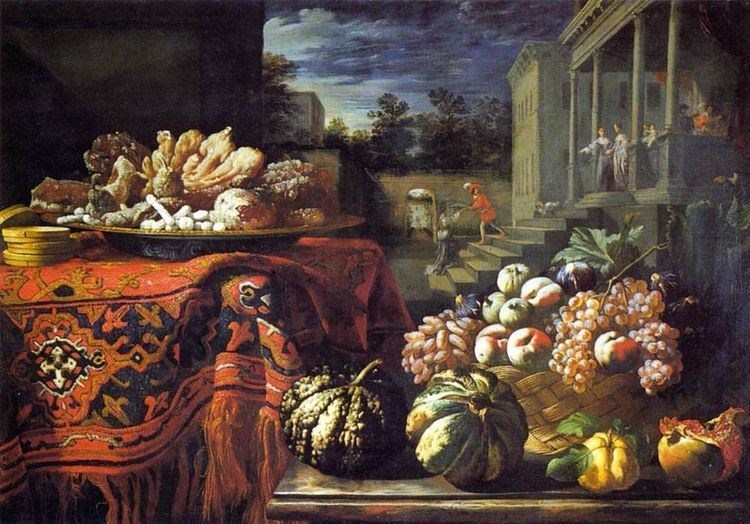
In the mid-17th century, he spent a long stay in Rome, where he honed his preference for still lifes, featuring flowers, fruits, crystals, brocades, and game, rendered with extraordinary luminosity, transparencies, and iridescence. Emblematic works include the Still Life with Flowers, Fruits, Crystals and Brocades, praised for the variety of motifs and luminous brushwork, and canvases at the Capodimonte Museum or Cento Pinacoteca integrating still life, figures, and landscape in exemplary compositions. He also created landscapes with biblical scenes like Loth and his Daughters and Hagar and the Angel, now in Dresden, and unpublished drawings like Landscape with Dionysian Scene and Outdoor Banquet.[1][2][3][5]
Settling definitively in Bologna in 1650, he married Giulia Ballarini in 1653 and had numerous children, including painters Carlo Antonio, Angelo Michele, and Giovanni Battista. His works, renowned in Emilian, Roman, and French collections, reflect an evolution toward a more felt naturalism, with real views and vivid anecdotes. Featured in auctions like those of Arcadia, Pier Francesco Cittadini remains a master of Baroque still life and polychrome painting, with canvases celebrating nature's generosity and material preciousness.[2][3][5][6]
In the mid-17th century, he spent a long stay in Rome, where he honed his preference for still lifes, featuring flowers, fruits, crystals, brocades, and game, rendered with extraordinary luminosity, transparencies, and iridescence. Emblematic works include the Still Life with Flowers, Fruits, Crystals and Brocades, praised for the variety of motifs and luminous brushwork, and canvases at the Capodimonte Museum or Cento Pinacoteca integrating still life, figures, and landscape in exemplary compositions. He also created landscapes with biblical scenes like Loth and his Daughters and Hagar and the Angel, now in Dresden, and unpublished drawings like Landscape with Dionysian Scene and Outdoor Banquet.[1][2][3][5]
Settling definitively in Bologna in 1650, he married Giulia Ballarini in 1653 and had numerous children, including painters Carlo Antonio, Angelo Michele, and Giovanni Battista. His works, renowned in Emilian, Roman, and French collections, reflect an evolution toward a more felt naturalism, with real views and vivid anecdotes. Featured in auctions like those of Arcadia, Pier Francesco Cittadini remains a master of Baroque still life and polychrome painting, with canvases celebrating nature's generosity and material preciousness.[2][3][5][6]
Past lots of Pier Francesco Cittadini
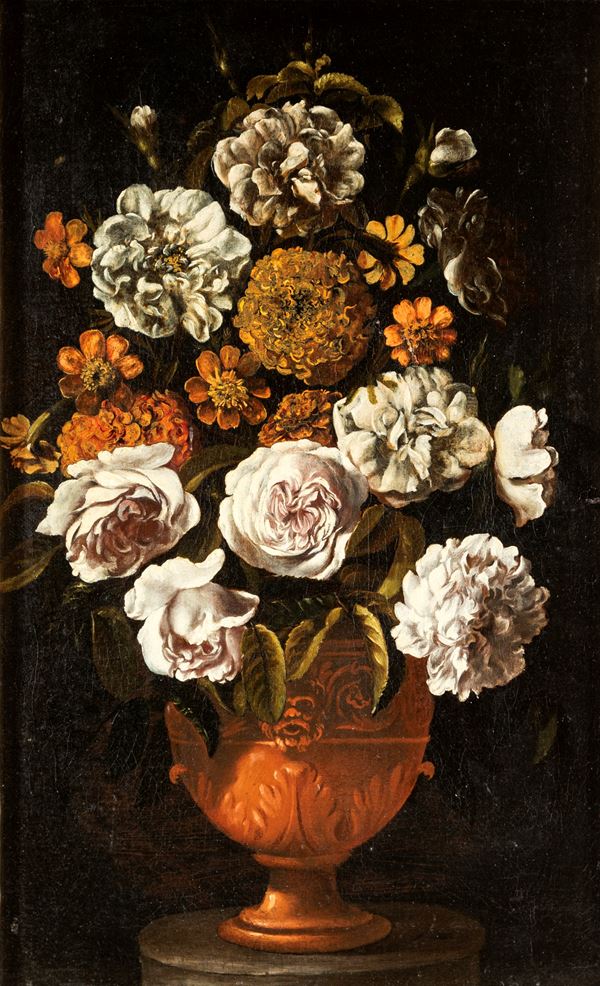
Pier Francesco Cittadini
(Milano, 1616 - Bologna, 1681)
Attribuito a
Natura morta con vaso di fiori
Natura morta floreale raffigurante un bouquet di rose, petunie e begonie in un vaso di terracotta, su fondo scuro. Composizione [..]
Sold