
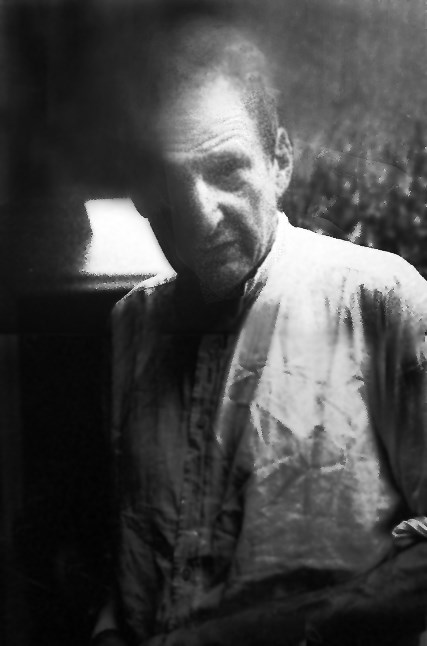
Evaluation Lucian Freud
Lucian Freud Valuations - Want to sell a Lucian Freud piece? Request a complimentary and confidential valuation!Casa d'Aste Arcadia will review your submission and offer a free-of-charge estimate, if your item is suitable for our auctions.
biography
Lucian Freud, born in Berlin on December 8, 1922, into a wealthy Jewish family and died in London on July 20, 2011, was one of the greatest English figurative painters of the 20th century, nephew of the renowned psychoanalyst Sigmund Freud. He moved with his family to Great Britain in 1933 to escape Nazi antisemitism and became a British citizen in 1939. His artistic training began in 1937 with his only sculpture, which earned him admission to the Central School of Arts and Crafts in London and later to the East Anglian School of Painting and Drawing in Dedham, under the guidance of mentor Cedric Morris. His studies were interrupted by military service in the navy during World War II. Initially influenced by surrealism, expressionism, and the New Objectivity of artists like Otto Dix and Oskar Kokoschka, Freud developed an intense realist style, characterized by thick, dense brushstrokes that give his portraits, self-portraits, and nudes a three-dimensional effect and anatomical depth, revealing human vulnerability.
A member of the School of London alongside Francis Bacon and Frank Auerbach, Freud gained his first recognition in 1944 with his solo exhibition, followed by participation in the 1954 Venice Biennale alongside Bacon and Ben Nicholson, where he showed the iconic work Hotel Bedroom. In the 1950s and 1960s, he refined his approach, abandoning sable brushes for hog bristle ones, focusing on the fleshy, earthy texture of skin, muscles, and body imperfections, always working from life with models from his intimate circle such as the mother of his daughters Bella and Esther, and friends like Bacon and Auerbach. His works explore psychological and physical intimacy, rejecting idealizations for a brutal, documentary realism that made him one of the most influential painters of the 20th century.
Freud produced over 300 paintings and 2000 drawings, exhibiting in solo shows in Japan, the United States, and at the Centre Pompidou in Paris in 2010. His works are renowned for their material painting and penetrating gaze into the human soul, influenced by wartime experiences and the post-war context. Today, Lucian Freud's creations are sought after in the art market, offered by auction houses like arcadia, which highlight his legacy as a 20th-century realist portraitist.
A member of the School of London alongside Francis Bacon and Frank Auerbach, Freud gained his first recognition in 1944 with his solo exhibition, followed by participation in the 1954 Venice Biennale alongside Bacon and Ben Nicholson, where he showed the iconic work Hotel Bedroom. In the 1950s and 1960s, he refined his approach, abandoning sable brushes for hog bristle ones, focusing on the fleshy, earthy texture of skin, muscles, and body imperfections, always working from life with models from his intimate circle such as the mother of his daughters Bella and Esther, and friends like Bacon and Auerbach. His works explore psychological and physical intimacy, rejecting idealizations for a brutal, documentary realism that made him one of the most influential painters of the 20th century.
Freud produced over 300 paintings and 2000 drawings, exhibiting in solo shows in Japan, the United States, and at the Centre Pompidou in Paris in 2010. His works are renowned for their material painting and penetrating gaze into the human soul, influenced by wartime experiences and the post-war context. Today, Lucian Freud's creations are sought after in the art market, offered by auction houses like arcadia, which highlight his legacy as a 20th-century realist portraitist.
Past lots of Lucian Freud

Lucian Freud
(Berlino, 1922 - Londra, 2011)
Head of a Girl II
Firma e numerazione "L.F. Studio Proof". Timbro a secco dello stampatore "Terry Wilson of Palm Tree Studios" in basso a [..]
Sold