
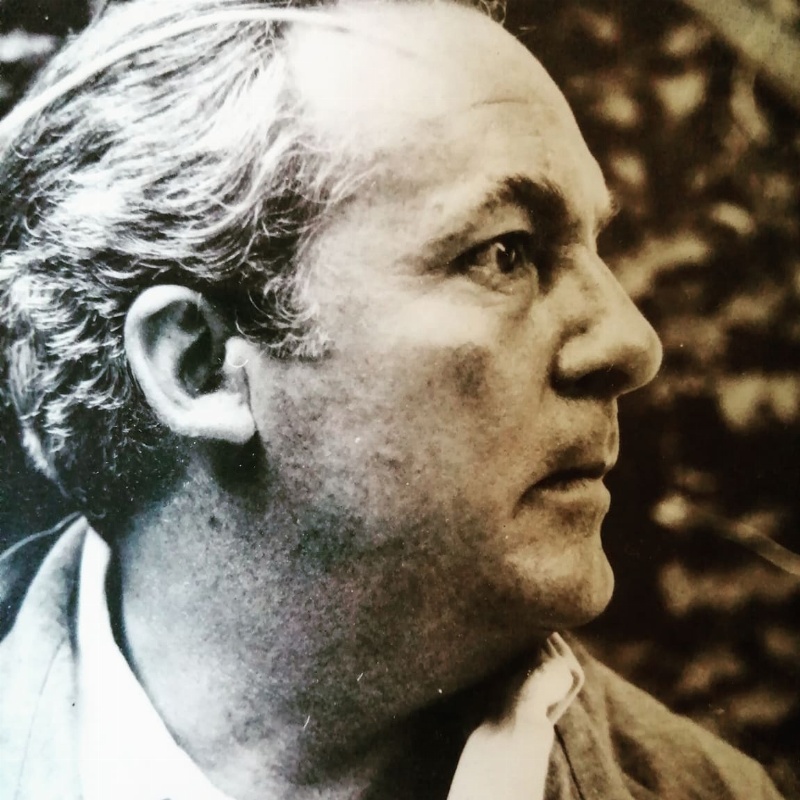
Evaluation Andrea Spadini
Andrea Spadini Valuations - Want to sell a Andrea Spadini piece? Request a complimentary and confidential valuation!Casa d'Aste Arcadia will review your submission and offer a free-of-charge estimate, if your item is suitable for our auctions.
biography
Andrea Spadini (Rome, 1912 – Rome, 1983) was an Italian sculptor and one of the most distinctive artistic voices of the twentieth century, known for a personal approach that combined classicism, dynamism, and imagination. The son of painter Armando Spadini, he came into contact with art at a very young age through his father, who introduced him to the masterpieces of the Galleria Borghese, especially the sculptures of Bernini. This early education helped shape his sculptural language, which remained closely connected to the Italian figurative tradition while staying independent from passing trends.
After his first studies, he attended Libero Andreotti’s school in Florence from 1925 to 1929, and later worked as an assistant to Arturo Martini at the Istituto d’Arte in Monza. His first exhibition took place in 1929 at the Circolo di Roma in Palazzo Doria, and in 1935 he took part in the Quadriennale of Rome, confirming his rapid rise on the Italian art scene. During the war years he was a member of the GAP, and after the conflict he also turned to ceramics, collaborating with Fabrizio Clerici.
Andrea Spadini’s sculpture is marked by formal precision, a strong sense of movement, and an ironic, visionary quality that made him especially admired abroad. Through the dealers Irene Brin and Gaspero del Corso, he came into contact with American collectors and patrons, gaining notable success in the United States. In 1956 the Sagittarius Gallery in New York devoted a solo exhibition to him; in 1960 his works were shown by Tiffany & Co., and in 1965 he created the celebrated bronze Musical Clock for the entrance to the New York Zoo in Central Park.
Andrea Spadini died in Rome in 1983, leaving behind a body of work that reflects a refined, unconventional, and consistent artistic vision. As a sculptor, draughtsman, and artist able to engage with collectors, galleries, and international institutions, he remains one of the most recognizable figures in twentieth-century Italian sculpture.
After his first studies, he attended Libero Andreotti’s school in Florence from 1925 to 1929, and later worked as an assistant to Arturo Martini at the Istituto d’Arte in Monza. His first exhibition took place in 1929 at the Circolo di Roma in Palazzo Doria, and in 1935 he took part in the Quadriennale of Rome, confirming his rapid rise on the Italian art scene. During the war years he was a member of the GAP, and after the conflict he also turned to ceramics, collaborating with Fabrizio Clerici.
Andrea Spadini’s sculpture is marked by formal precision, a strong sense of movement, and an ironic, visionary quality that made him especially admired abroad. Through the dealers Irene Brin and Gaspero del Corso, he came into contact with American collectors and patrons, gaining notable success in the United States. In 1956 the Sagittarius Gallery in New York devoted a solo exhibition to him; in 1960 his works were shown by Tiffany & Co., and in 1965 he created the celebrated bronze Musical Clock for the entrance to the New York Zoo in Central Park.
Andrea Spadini died in Rome in 1983, leaving behind a body of work that reflects a refined, unconventional, and consistent artistic vision. As a sculptor, draughtsman, and artist able to engage with collectors, galleries, and international institutions, he remains one of the most recognizable figures in twentieth-century Italian sculpture.
Past lots of Andrea Spadini
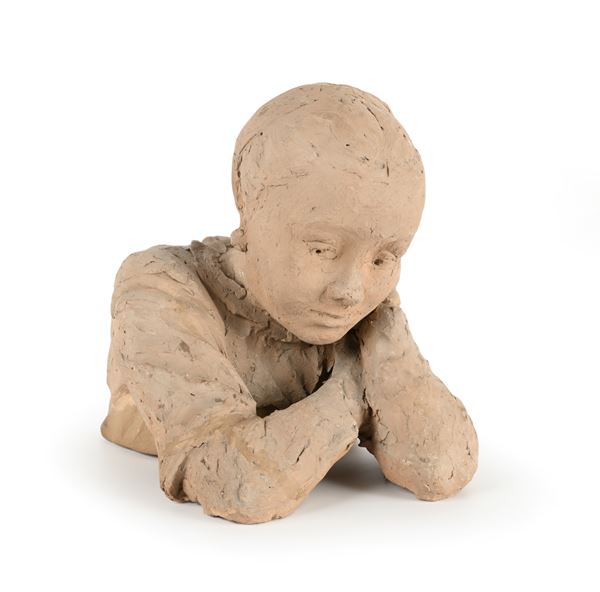
Andrea Spadini
(Roma, 1912 - Roma, 1983)
Pasqualina che studia
Scutlura in terracotta cm 30x29,5x31,5
Sold