
Evaluation André Masson
André Masson Valuations - Want to sell a André Masson piece? Request a complimentary and confidential valuation!Casa d'Aste Arcadia will review your submission and offer a free-of-charge estimate, if your item is suitable for our auctions.
biography
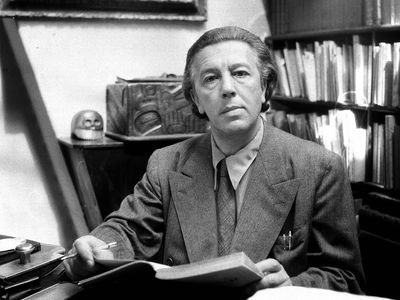
André Aimé René Masson (1896-1987) was a French painter, sculptor, scenographer, and writer, considered a key figure in the Surrealist movement and a pioneer of action painting. Born in Balagny-sur-Thérain in Picardy on January 4, 1896, Masson dedicated his artistic life to exploring the irrational world and the unconscious through innovative and experimental techniques. He studied at the Académie Royale des Beaux-Arts in Brussels (1908-1912) and subsequently at the École Nationale Supérieure des Beaux-Arts in Paris, where he developed a strong interest in Cubism and artistic avant-garde movements.
During World War I, Masson was severely wounded in the chest in 1917 at the Chemin des Dames, a traumatic event that profoundly influenced his artistic vision and thematic research. Returning to Paris in 1920, he met André Breton and the Surrealist group, officially joining the movement in 1924. Masson is best known for inventing "automatic drawing" as early as 1923, anticipating the automatic writing formulated by Breton in his 1924 Manifesto. He developed a particular technique of automatic painting: he would drip glue onto canvas, spread sand over the glue stains, and then paint over with oil paint, creating casual and suggestive forms. Among his significant works are "Les Quatre éléments" (1924) and "Battle of Fishes" (1926), which use sand and glue to create unique textures.
In 1929 Masson broke with Surrealism and undertook travels to Germany, Holland, and Spain, where from 1934 to 1936 he created caricatures of political figures for antifascist magazines during the Spanish Civil War, contributing to the struggle for freedom. He painted "hallucinated metaphysical landscapes," series on insects, and bullfighting scenes. From 1937 he drew closer to Breton again, beginning a second Surrealist phase that lasted until 1947. His stay in the United States from 1942 to 1945 was decisive for the new generation of avant-garde artists, including Jackson Pollock and Arshile Gorky. In 1943 he broke again and definitively with Breton and Surrealism.
Returning to France in 1945, Masson settled near Aix-en-Provence, where he painted monumental canvases in homage to the Resistance and continued to explore both figurative landscapes and abstractions, pursuing the exploration of violent and erotic themes. In 1950 he published the collection of writings "Plaisir de peindre." He also worked as a scenographer for the Ballets Russes (from 1933) and for theater, opera, and ballet. In 1965, at the urging of André Malraux and Jean-Louis Barrault, he decorated the ceiling of the Odéon, Théâtre de France, in Paris. In 1972 he exhibited at the Venice Biennale and in 1976 the Museum of Modern Art in New York mounted an important retrospective of his work. Masson died in Paris on October 28, 1987, leaving a profound artistic legacy in the twentieth-century art world, characterized by the exploration of the unconscious, technical innovation, and the ability to translate the inner movements of the human soul into powerful and evocative visual images.
During World War I, Masson was severely wounded in the chest in 1917 at the Chemin des Dames, a traumatic event that profoundly influenced his artistic vision and thematic research. Returning to Paris in 1920, he met André Breton and the Surrealist group, officially joining the movement in 1924. Masson is best known for inventing "automatic drawing" as early as 1923, anticipating the automatic writing formulated by Breton in his 1924 Manifesto. He developed a particular technique of automatic painting: he would drip glue onto canvas, spread sand over the glue stains, and then paint over with oil paint, creating casual and suggestive forms. Among his significant works are "Les Quatre éléments" (1924) and "Battle of Fishes" (1926), which use sand and glue to create unique textures.
In 1929 Masson broke with Surrealism and undertook travels to Germany, Holland, and Spain, where from 1934 to 1936 he created caricatures of political figures for antifascist magazines during the Spanish Civil War, contributing to the struggle for freedom. He painted "hallucinated metaphysical landscapes," series on insects, and bullfighting scenes. From 1937 he drew closer to Breton again, beginning a second Surrealist phase that lasted until 1947. His stay in the United States from 1942 to 1945 was decisive for the new generation of avant-garde artists, including Jackson Pollock and Arshile Gorky. In 1943 he broke again and definitively with Breton and Surrealism.
Returning to France in 1945, Masson settled near Aix-en-Provence, where he painted monumental canvases in homage to the Resistance and continued to explore both figurative landscapes and abstractions, pursuing the exploration of violent and erotic themes. In 1950 he published the collection of writings "Plaisir de peindre." He also worked as a scenographer for the Ballets Russes (from 1933) and for theater, opera, and ballet. In 1965, at the urging of André Malraux and Jean-Louis Barrault, he decorated the ceiling of the Odéon, Théâtre de France, in Paris. In 1972 he exhibited at the Venice Biennale and in 1976 the Museum of Modern Art in New York mounted an important retrospective of his work. Masson died in Paris on October 28, 1987, leaving a profound artistic legacy in the twentieth-century art world, characterized by the exploration of the unconscious, technical innovation, and the ability to translate the inner movements of the human soul into powerful and evocative visual images.
Past lots of André Masson
André Masson©
( Balagny-sur-Thérain, 1896 - Parigi, 1987)
Paysan auvernan
Firma e data "Andrè Masson 1940" Matita, china e acquarello su carta applicata su tela cm 65x50 - in cornice cm 90x72
Sold
André Masson©
( Balagny-sur-Thérain, 1896 - Parigi, 1987)
Senza titolo
es. E.A., sc, firma a matita sul fronte. Timbro a secco.
Sold
André Masson
( Balagny-sur-Thérain, 1896 - Parigi, 1987)
SENZA TITOLO
SENZA TITOLO - Stampa Multipla realizzata su disegno originale, cm 50x32.
Sold
André Masson©
( Balagny-sur-Thérain, 1896 - Parigi, 1987)
Andrè Masson
Andrè Masson, volume edito dalla Seat nel 1981 a cura di Carmine Benincasa. L'opera è composta da un saggio J Paul Sartre, [..]
Sold
André Masson©
( Balagny-sur-Thérain, 1896 - Parigi, 1987)
Judith
Firma e numerazione "Andrè Masson Ea" Litografia su carta Arches cm 53x75 - in cornice cm 60x82
Sold
André Masson©
( Balagny-sur-Thérain, 1896 - Parigi, 1987)
Ritratto d'uomo
Firma e numerazione "Andrè Masson p.d.s.". Timbro a secco dello stampatore in basso a destra Acquaforte/acquatinta cm 50x70 [..]
André Masson©
( Balagny-sur-Thérain, 1896 - Parigi, 1987)
Composizione con figure
Firmata in basso a destra "Andrè Masson" Inchiostro su carta cm 65x50 - in cornice cm 72x57
André Masson©
( Balagny-sur-Thérain, 1896 - Parigi, 1987)
Leggenda
Firma e numerazione "Andrè Masson 61/100" Litografia cm 50x65,5 - in cornice cm 62x77
André Masson©
( Balagny-sur-Thérain, 1896 - Parigi, 1987)
Eclosions
Firma in basso a destra "Andrè Masson". Al verso reca titolo. Etichetta della galleria "Studio Due Ci Arte Moderna Roma". [..]
André Masson©
( Balagny-sur-Thérain, 1896 - Parigi, 1987)
Femme a maitre voilée
Firma in basso a sinistra: A. M.
André Masson©
( Balagny-sur-Thérain, 1896 - Parigi, 1987)
Paesaggio
Firma sul fronte "Andrè Masson"
André Masson©
( Balagny-sur-Thérain, 1896 - Parigi, 1987)
Senza Titolo
es. E.D. Firma a matita sul fronte
André Masson
( Balagny-sur-Thérain, 1896 - Parigi, 1987)
SCULTURA IN BRONZO CM 8,5X9X41 CM, FIRMATO MODIGLIANI H.C.
SCULTURA IN BRONZO CM 8,5X9X41 CM, FIRMATO MODIGLIANI H.C. - Scultura in bronzo, realizzata d'apres esemplare 99 cm [..]
André Masson©
( Balagny-sur-Thérain, 1896 - Parigi, 1987)
Scena Erotica
Scena Erotica
Tecnica mista su carta applicata su tela, cm 26,5x20,5
Firmato in basso
Opera acquistata dall'attuale [..]
André Masson©
( Balagny-sur-Thérain, 1896 - Parigi, 1987)
Male et Femelle
Male et Femelle
Inchiostro e china su carta, cm 30,7x24
Firmato in basso
Autentica su foto rilasciata dallo Studio Due [..]
André Masson©
( Balagny-sur-Thérain, 1896 - Parigi, 1987)
Reverje Erotique
Reverje Erotique, 1960
Disegno acquarello, cm 32x50
Firmato in basso a sinistra
Autentica su foto rilasciata dallo Studio [..]
André Masson©
( Balagny-sur-Thérain, 1896 - Parigi, 1987)
Venezia
Venezia, 1951
Aquarello su carta, cm 43,2x27,7
Firmato e datato in basso a sinistra
Opera acquistata dall'attuale [..]
André Masson©
( Balagny-sur-Thérain, 1896 - Parigi, 1987)
Autoritratto periodo americano
Autoritratto periodo Americano, '42/44
Tecnica mista su tela, cm 33x26
Firmata sul retro
Opera acquistata dall'attuale [..]
André Masson©
( Balagny-sur-Thérain, 1896 - Parigi, 1987)
Paesaggio Romano
Paesaggio Romano, Anni '50
Disegno su cartoncino, cm 53,5x36
Firmato in basso a destra
Opera acquistata dall'attuale [..]